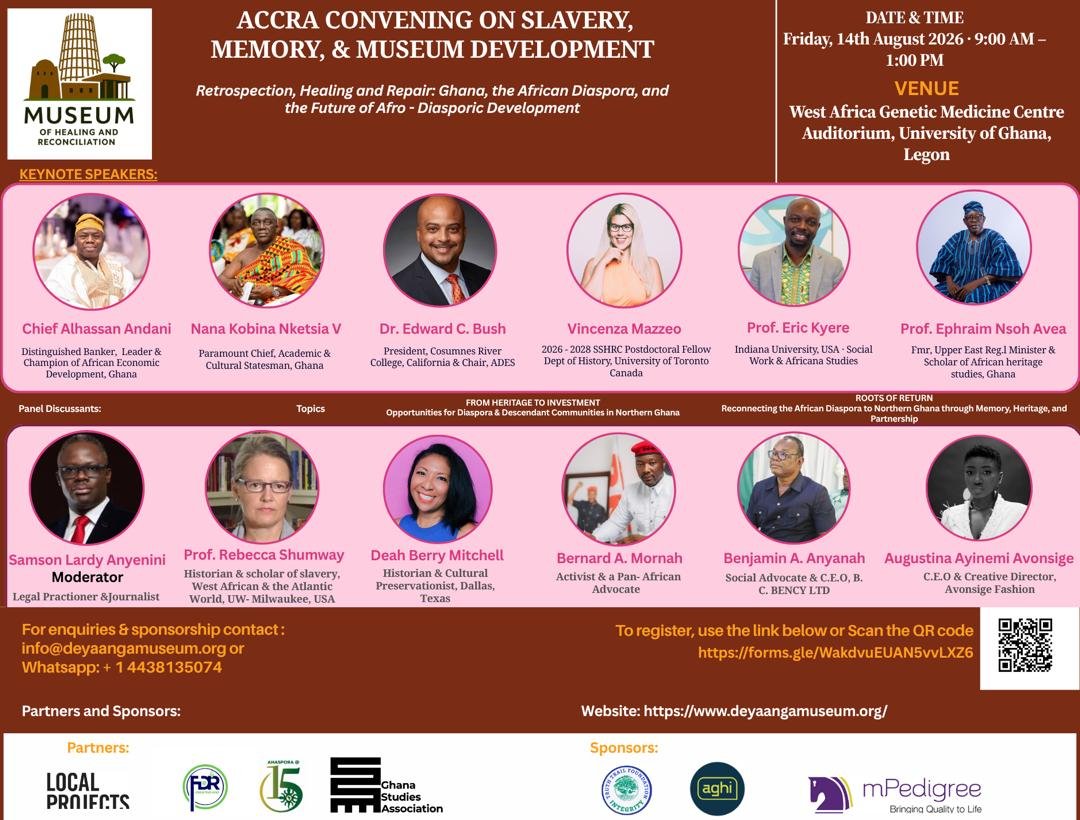
Ghana, the African Diaspora, and the Future of Afro-Diasporic Development
Register NowThe Accra Convening on Slavery, Memory, and Museum Development brings together leading scholars, policymakers, cultural practitioners, and members of the public to engage a central question: How can the histories of slavery and colonialism be mobilized not only for remembrance but also for healing, unity, and development?
This convening creates a platform for meaningful dialogue between descendant communities in Africa and the African diaspora, focusing on how shared histories can be transformed into collaborative futures. It is anchored in the development of the Museum of Healing and Reconciliation in Northern Ghana — a project that seeks to document inland histories of slave raiding and colonialism while creating a common platform for dialogue, education, and reparative engagement between local communities and the African diaspora.
The event is free and open to all — researchers, students, community members, cultural institutions, and members of the diaspora. Registration is required.
Bring interior communities — where people were captured, resisted, and endured — into global conversations on slavery and memory.
Connect continental African and diasporic perspectives, fostering dialogue across generations and geographies.
Create practical pathways for reconciliation, investment, and development rooted in shared historical truth.
Establish Northern Ghana as a critical site for rethinking heritage, reparative futures, and Afro-diasporic partnership.
A defining feature of this initiative is a series of community-based engagements across northern Ghana prior to the Accra convening, scheduled for June–July 2026. These engagements ensure that the project is grounded in the voices and experiences of the communities most directly affected by slave raiding.
Proposed locations: Mirigu, Bolgatanga, Bongo, Navrongo, Paga, Sandema, Zecco, and Gwollu (subject to sponsorship and logistical support).
Record the living memories and oral traditions of affected families across the Upper East Region and beyond.
Explore how communities historically mobilized to resist slave raiding — and how that legacy shapes identity today.
Gather critical feedback to shape the Museum of Healing and Reconciliation from community-informed knowledge, not external interpretation.
Community visits are subject to sponsorship confirmation. If you are an organization, foundation, or individual interested in supporting this community engagement program, please contact us. Your support will directly enable these communities to be heard.


The convening is free and open to all. Registration is required. For enquiries and sponsorship opportunities, reach out to us directly.